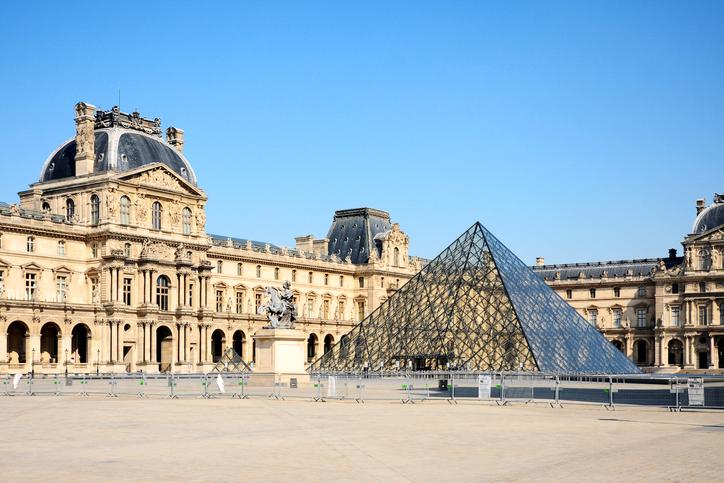
The Louvre Museum (Musée du Louvre) in Paris is one of the world’s most famous and largest museums. It is located in the historic Louvre Palace, whose origins date back to the 12th century, when it was built as a fortress under King Philip II. Over the centuries, the building was transformed into a magnificent royal palace before becoming a public museum during the French Revolution. The museum officially opened in 1793.
The Louvre is famous for its enormous and diverse collection of artworks spanning thousands of years and many civilizations. Its collections include Egyptian, Greek, Roman, Islamic, European and Near Eastern art, as well as paintings, sculptures, decorative arts, drawings and archaeological objects. The museum's collection database contains information on more than 500,000 works.
Among its most celebrated masterpieces is Leonardo da Vinci’s Mona Lisa, one of the world's most recognizable paintings. Other famous works include the Venus de Milo and the Winged Victory of Samothrace.
The Louvre is also famous for its modern glass Pyramid, designed by architect I. M. Pei, which serves as one of the museum's principal entrances. Today, the Louvre is not only a museum but also a remarkable historical monument, combining French history, architecture and art in one extraordinary place.
For anyone visiting Paris, the Louvre offers an unforgettable journey through nearly 10,000 years of art history.