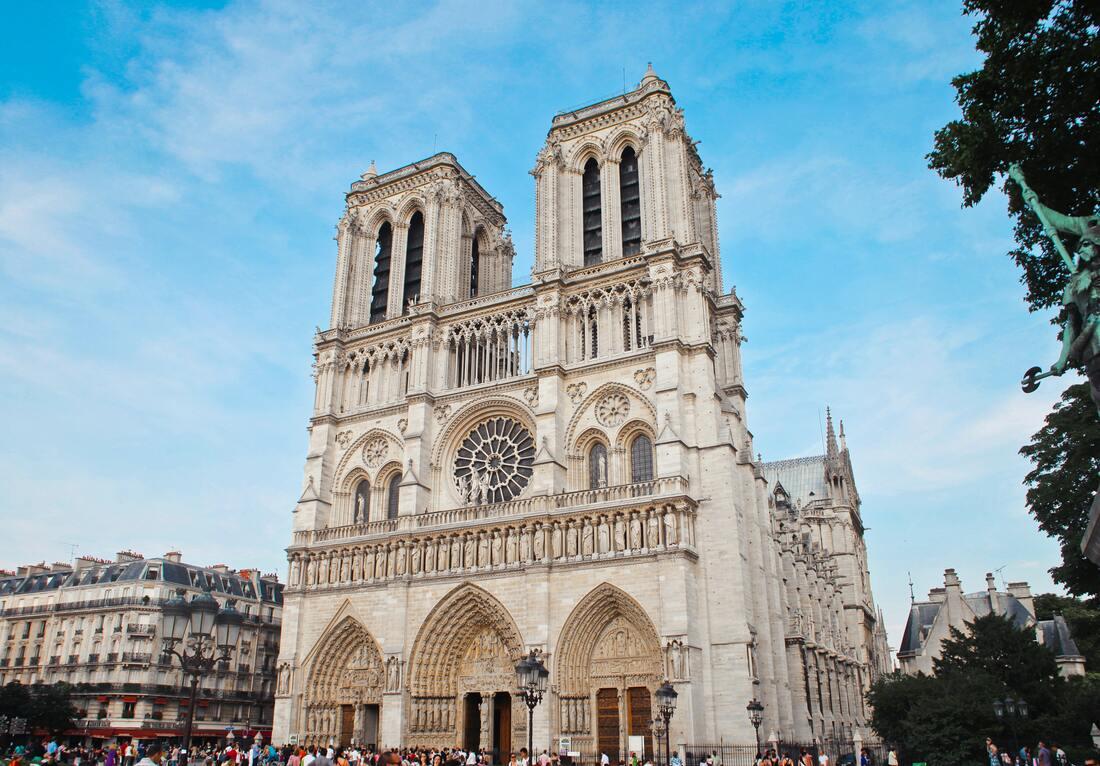
Notre-Dame de Paris is one of the most famous Gothic cathedrals in the world and an important symbol of Paris and French history. Located on the Île de la Cité in the River Seine, the cathedral has stood at the heart of Paris for centuries.
Construction of Notre-Dame began in 1163 during the medieval period and continued for almost two centuries. Its architecture is characterized by impressive Gothic features, including pointed arches, large stained-glass windows, flying buttresses, and detailed stone carvings. The cathedral's two large towers are among its most recognizable features.
Notre-Dame has played an important role in French religious and cultural history. It has hosted major ceremonies and attracted visitors from around the world. The cathedral also became famous through Victor Hugo's 1831 novel The Hunchback of Notre-Dame.
In April 2019, a major fire severely damaged the cathedral, particularly its roof and spire. Following extensive restoration work, Notre-Dame reopened to the public in December 2024, marking an important moment in its history.
Today, visitors can admire its restored architecture and historic artwork while exploring the surrounding Île de la Cité. Notre-Dame remains an important example of medieval architecture and a significant part of Paris's cultural heritage.