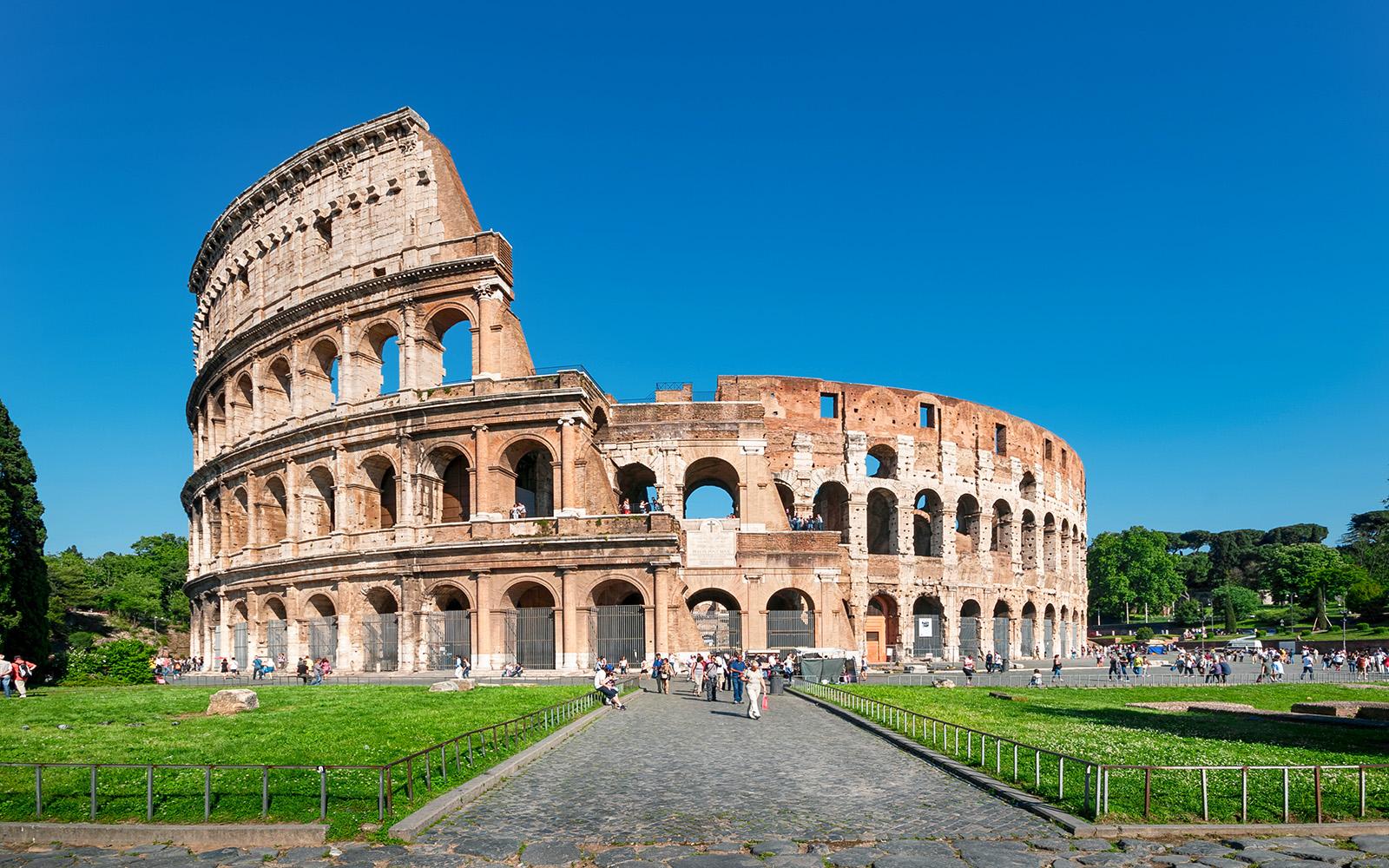
The Colosseum is one of the most famous ancient landmarks in the world and a major symbol of Rome and the Roman Empire. Also known as the Flavian Amphitheatre, it was built nearly 2,000 years ago during the reigns of the emperors Vespasian and Titus. Construction began around AD 70–72 and was completed around AD 80.
The Colosseum was a huge amphitheatre designed to accommodate tens of thousands of spectators. It hosted public entertainment, including gladiatorial contests, animal hunts, and other spectacles. These events were an important part of Roman public life and were organized on a grand scale.
The building was constructed mainly from stone and concrete and originally had several levels of seating. Beneath the arena was a complex underground area called the hypogeum, where animals, equipment, and performers could be prepared before appearing in the arena.
Over the centuries, earthquakes, natural deterioration, and the reuse of building materials caused significant damage to the structure. Nevertheless, much of the Colosseum remains standing and has been preserved as an important archaeological monument.
Today, visitors from around the world come to explore its ancient corridors, seating areas, and underground spaces. The Colosseum is also part of the historic center of Rome, a UNESCO World Heritage Site.