Yellowstone National Park is one of the most famous national parks in the United States and is widely known for its spectacular landscapes, geothermal features, and wildlife. Established in 1872, it was the world’s first national park and covers a vast area across Wyoming, Montana, and Idaho.
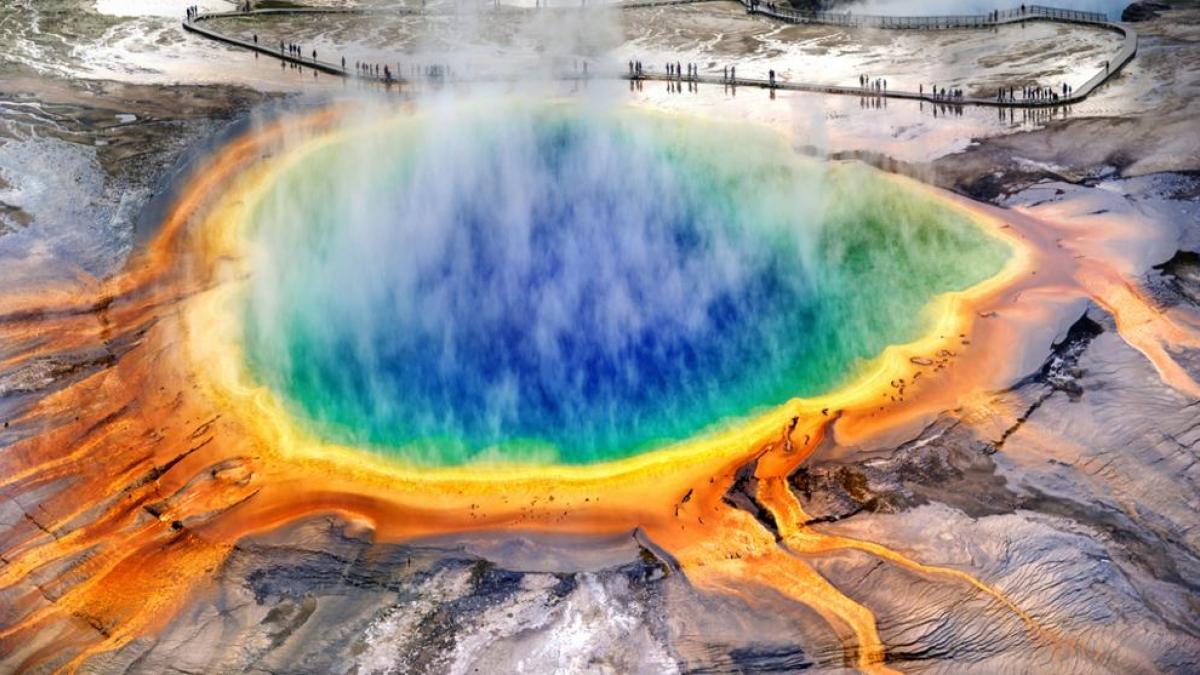
Yellowstone is particularly famous for its geysers and hot springs. Old Faithful is the park’s best-known geyser and regularly shoots hot water high into the air. Another remarkable attraction is the Grand Prismatic Spring, famous for its brilliant bands of blue, green, yellow, orange, and red created by heat-loving microorganisms.
The park also contains dramatic mountains, forests, lakes, rivers, and waterfalls. The Grand Canyon of the Yellowstone is one of its most impressive landscapes, with the Yellowstone River flowing through colorful canyon walls and creating spectacular waterfalls.
Yellowstone is home to a remarkable variety of wildlife. Visitors may see bison, elk, bears, wolves, and other animals in their natural environment. The park's large ecosystems provide important habitat for many species.
Beyond its natural beauty, Yellowstone is significant for scientific research and conservation because of its active geothermal system and diverse ecosystems.
With its combination of geysers, colorful hot springs, wildlife, forests, mountains, and canyons, Yellowstone offers visitors an extraordinary opportunity to experience the power and diversity of nature.